

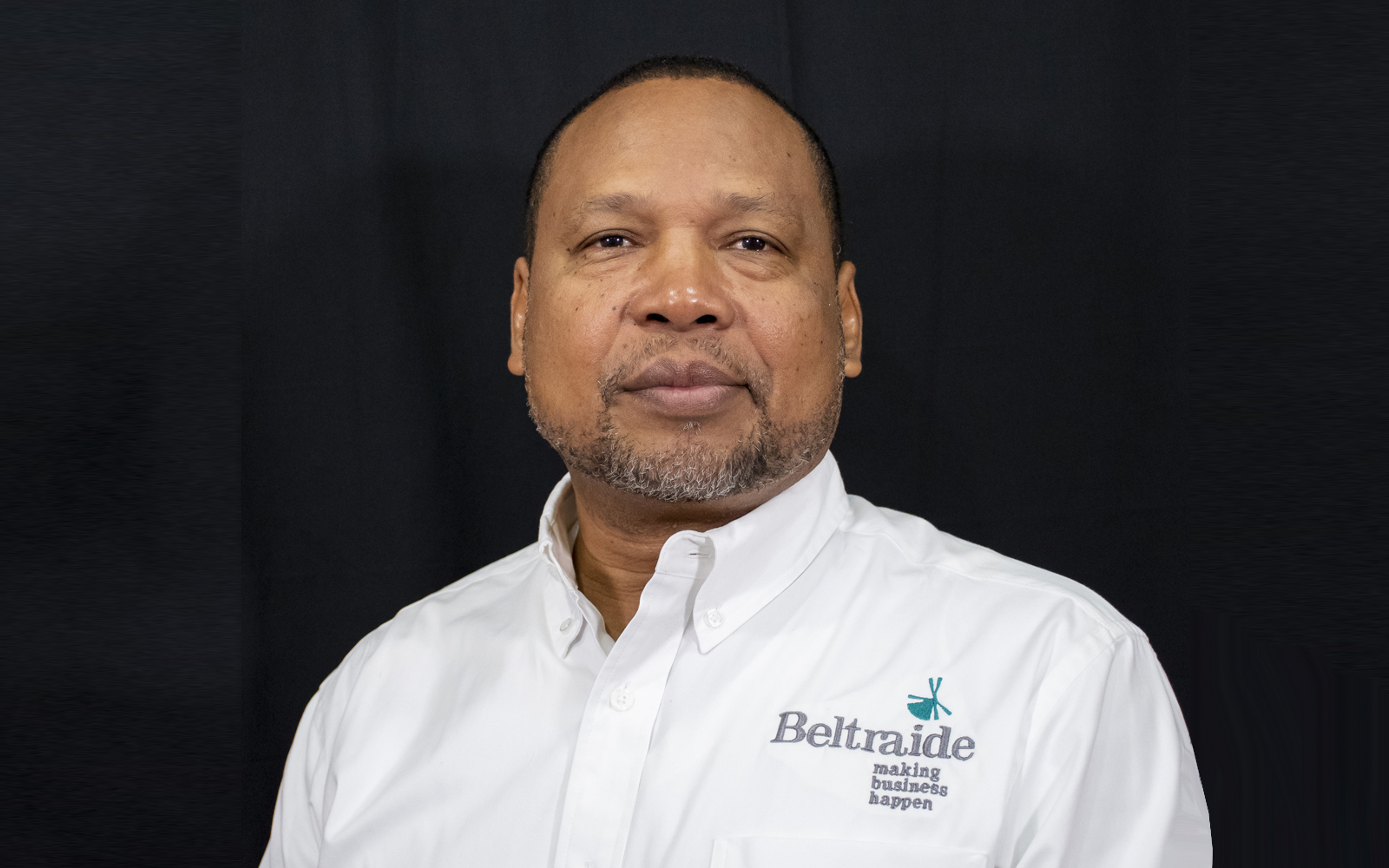
02 Feb Interview with Dr. Leroy Almendarez, Executive Director, Beltraide
The Belizean economy is finally on the rebound, with a GDP growth of 5.7% forecast for this year, and 3.8% for 2023. As Executive Director of Beltraide, Belize’s leading government entity in attracting FDI, your leadership has played an important part in the country’s recent growth and economic recovery. What are your strategic visions and goals for the organization? If you were to analyze the core strengths of the regional economy, how and where does Belize stand out?
We have been looking to position Belize as an investment hub, not only for foreign direct investment, that in a way is very competitive, but also for local investment, because whatever incentives we put in place, it’s to attract local and foreign. You mentioned GDP growth; as a matter of fact, we just finished a very important policy and strategy called the National Investment Policy and Strategy, and we were able to benchmark against other countries.
This identified a number of challenges. It includes nine specific policy pillars. We believe that over the next three years or so, it will make us even more competitive, because it includes digitization, it includes economic diplomacy. You also mentioned the growth in GDP. That’s very positive for us because in our Horizon 2030 and the growth and sustainable development strategy, what we looked at is to see how we could increase GDP per capita. To do that, it means you have to increase GDP.
In terms of Beltraide being the national development agency for investment promotion and export promotion, it means that we have to continue to look at how to generate investments. In November of last year, we have put on our first ever Belize Investment Summit. It was a great success. During the pandemic, we had over 300 people physically in place in San Pedro, and we had thousands who tuned in online. What we’re doing is to position projects along our priority areas: tourism, agriculture, which took over when we had the challenge with tourism and really took off, but another two other big areas that we’re looking at are renewable energy – we want a green economy, and so the fact that we depend about 50% from Mexico, depending on what time of year it is, it’s important for us to increase our domestic generation, so that at one point we become net exporter, but not only that as we really want to grow a green economy or carbon footprint – and another area is business process outsourcing.
I mentioned that policy but there are other policy changes, legislative changes, procedural changes. We are looking at registering a business, starting a business, getting access to electricity, taking care of minority interests or dealing with liquidity or insolvency, and we’re focusing not only on large enterprises, but also the small and medium enterprises.
The Covid pandemic’s severe impact on Belize led to a 16.7% contraction in real GDP in 2020, and downturns in key sectors caused unemployment to rise to 13.8%. Beltraide was quick to provide relief to local MSMEs in the form of business workshops, unemployment grants, and its MSME Support Program. Could you give us a brief overview of how successful these initiatives have been in rebuilding the Belizean business community, and what some of the greatest challenges were in doing so?
The pandemic was a matter of when not if. The first thing we did was to make sure that we were able to transition virtually, which we were able to do. Under Beltraide, it’s important for me to mention that it has its own ecosystem. As a matter of fact, as a training center, which is demand driven, that those who will need employable skills can get those skills and become absorbed into the workforce. We also have a Small Business Development Center, which not only provides advisor support but has a business plan support and follow through with micro, small and medium enterprises, really ensuring that they can remain competitive and sustainable.
Because the government has adopted an export-led growth, we also have an Export Belize Unit which helps those who have transitioned and want to export. And then of course the largest in terms of investment is the Investment Belize Unit. Two months after the first case hit us, we did a survey just to find out what’s the immediate impact when it continued to grow, and we found out that, of those that responded, 83% fit within those vulnerable areas, and 54% of them were most vulnerable because they were micros. The government injected 14 million in loans and grants. The micros were given grants because some of them just needed working capital, and because you’re a micro it’s not easy for you to pivot. Small and medium were given loans at a very affordable rate of 3% fix and it wasn’t changed with that grace period of 12 months. Apart from that, there was a retention strategy. Those business owners, who wanted to retain their employees, as long as they had their social security up to date, were also provided with that incentive as well.
It’s hard to see the pandemic in a positive way, but there are positives that came from it, because it created its own demands, it created its own opportunities. Those who were able to pivot – for example masks suddenly became something that was being produced rather than imported, as well as hand sanitizers or testing boosters, and a number of things – a number of these enterprises pivoted and they continued to survive.
The other thing that happened was that the international supply chains have been disrupted. It became a real challenge, because we are so dependent on an international market for inputs. In some cases, those who pivoted also created domestic supply chains. If you do that, it means you’re creating employment for others. If my output becomes an input for you, then there’s greater economic activity within the marketplace, and, at least, rather than closing them and become even more dependent on the government’s purse – because the government contracted as well – it created an opportunity.
Now, with the transition, the present administration is focusing a lot on this sector as really the driving force for further economic recovery. Indeed, at one point in time, our GDP grew by 22% in one quarter, which is a good sign. It continues to grow because now the government is able to provide a level of subsidy to stimulate further growth within the various sectors that require this kind of assistance, but putting in a lot of digitization as well with the digital agenda to make easier access, reducing costs of moving around, and access these things online through a lot of initiatives that are coming together. We just concluded a draft MSME strategy. All of these things will help us in this great resilience, in this great competitiveness, and I can just see continued growth in this country.
Beltraide recently collaborated with DFC (Development Finance Corporation) to implement the Belize Enterprise Revolving Fund (or BERF), through which you aim to diversify the local economy by bolstering the competitiveness of MSMEs. Which businesses or groups you will be targeting through this program, and why? As you work towards diversifying the Belizean economy, what are some of the new and emerging opportunities and high-growth sectors that will bring economic growth to Belize going forward?
In terms of what the government is also looking at is traditional and non-traditional. We tend to focus a lot on sugar, banana and citrus. These are the recurrent crops if you will; those primary crops that we tend to focus a lot on them. But what we’re looking at is non-traditional as well. For example, seaweed, which is something that we use to just convert to a drink, but there is so much value that can be added. Because of that, they are now farming seaweed; they are not just picking it up from the sea. A good thing about it, based on the blue economy, is that it creates an ecosystem. In other words, it does not create negative externalities where underwater marine life gets affected.
Coconut is another big one. Coconut was always to be the next big thing for the Caribbean nations. Coconut is something that we’re planting even more. There are so many derivatives of coconut; there are so many things you can do with the shell, rather than just the water. Tt’s the same thing with the seaweed; there are so many things that can be done with that. Therefore, diversification! It is a focus on the present administration: diversification, because we saw what happened with tourism. We can no longer allow one industry being affected that way again, without having substitutes that can continue to drive and create employment, rather than reducing employment.
You asked about the Belize Enterprise Revolving Fund. The main focus of that is to stimulate growth for women-led and youth-led enterprises. We have received some funding through the CARICOM Development Fund, and it will stimulate those women-led and youth-led enterprises that don’t have access to finance, because those two demographics are highly considered non-bankable, hard for them to get loans. We hope that this can continue to stimulate. Also, as it will be divided into a grant and a loan, what is paid back can continue to revolve and create major opportunities for other SMEs
Earlier this year you represented the country at the Dubai Expo 2020, where you participated in the Caribbean Investment Forum and Belize had the opportunity to showcase its rich cultural history, biodiversity, and the promising investment opportunities the country holds. What are your thoughts on Belize as an FDI destination in the post-pandemic era, and why should Belize be on the radar of international travelers, workers, and investors today?
At Expo Dubai, the world was there; over 192 countries and a lot of associations were present. It allowed us to network. It was very enriching. Those who didn’t know about Belize learned about it and about its culture, what its exports are and what opportunities exist. Apart from that, I was able to participate in some of these parallel discussions at the annual investment meeting. We learned that we also have to build out our skill set or capacity, because that’s what investors look at: when it comes to experience we have all the natural wonders, a really big comparative advantage that we have when it comes to the natural resources. Tourists are no longer looking for beach tourism only; it is experiential tourism and we also have medical tourism. These are things that we continue to promote.
When I was out there, I was a Commissioner General for Belize, and therefore I was able to be with a lot of my colleagues, and we’re still communicating. You mentioned the Caribbean Investment Forum: within the Expo, that forum took place. What we’re doing is to package these projects. I just left Montego Bay Jamaica. In the next two weeks or so, there’s a meeting in the Dominican Republic where a group of 40 Saudi Arabians are looking for investment. We will be pitching these projects to them. It’s all embracing, and it creates even more publicity for Belize and opportunities for domestic investment with projects that we can actually do through joint ventures.
Could you touch on some of the key points discussed at the Investment Forum, as they pertained to Belize’s investment potential?
We put together what is called a pipeline of projects. There are a lot more priority areas, for example hotels. There are a number of brands that are building in Belize, and that means conformity to certain procedures and standards. We’re doing that and some are being built at this point in time. The other big one is renewable energy and we’re focusing on solar, on biomass, but not so much hydro, not so much geothermal. We’re exploring wind, but we don’t have the consistent velocity that will drive that, and you have to look at the startup cost needed in order to get your equipment. We’re looking at agro technology to make things even more efficient in terms of agriculture procedures: these will help a lot these small farmers that in many cases are informal. We are working with them, and not only the farmers, but others within the whole group of MSMEs to see how we can get those who are informal to understand that there are many benefits to formalize.
The forum really provided an opportunity for us to position ourselves. We signed a MoU with a member of the ruling family in Dubai, and we have six areas that we’re working on presently, and we expect to see a lot materialize out of that. They are in line with the current areas I mentioned: tourism, agriculture, renewable energy, ICT, smart metering. These are so many areas that will really create efficiencies for us, and to become even more attractive to the international investment.
What is the role and importance of strategic international partnerships in the development of Belize’s economy and infrastructure, and what are some potential international partnerships the country is targeting?
That strategy for us is very important. As a matter of fact, let me just give you three. I sit on three boards, two in the Caribbean and one in Central America, because Central America is also focus for us to become an investment of Central America.
Within Central America, there’s this board called Cenpromype. They focus on micro, small and medium enterprises. What we have agreed to do is to come together and analyze our potential, taking a look at what we produce better, the comparative advantage where we can create that trade within Central America, and we’re working very hard on that. That allows us an opportunity, because we have a board, we have more representation.
In the Caribbean, we have the Caribbean Association of Investment Promotion Agencies. Through Beltraide, I sit as the second Vice President. As a matter of fact, I was in Montego Bay and we were looking recently at this whole notion of special economic zones and free zones, trying to bring all the entities together to become a part of the World Free Zone Authority Organization. We’re working on that: a great opportunity for our free zones here. There’s the Caribbean Export Development Agency. That’s an agency that helps with export capacity through funding, etc. Through Beltraide, I represent the country as the deputy chair. This is all strategic for us, because it allows us to have a voice, and a strong voice, because we’re a member of the Executive.
Therefore, these are pivotal for us. Apart from the World Trade Organization and other entities that we belong to, these three are very strategic because they’re right in the region, they are aligned with the secretariat of CARICOM, and it includes the Dominican Republic. It brings even more opportunities for us to do business with each other, and for us to do business as a block when it comes to EU and some of these larger blocks that exist when it comes to trade.
You recently joined forces with The Ministry of the Blue Economy to implement a Blue Economy road map for the country as it seeks to encourage investment and development through the sustainable use of Belize’s pristine oceanic resources. As businesses become increasingly eco-oriented, what are some of the potential investment opportunities for those looking to invest in Belize’s green and blue economy, and how do you plan to promote investor interest in those areas?
I am one of those who were asked to be a part of the blue economy cluster to help to develop this ministry because it’s brand new. We have gone through the process of putting together a national vision and mission, and there’s a strategy in place. Some of these things already existed, but they were aligned elsewhere. There’s greater alignment now with the blue economy, so you have investment. There are so many things that exist in water. The fisheries industry is also a big part of it; we’re farming Tilapia and we’re farming shrimp. Aquaculture is a very big thing for this country. Some years ago we were exporting over $50 million in shrimp, but because we were affected by Early Mortality Syndrome, it actually reduced that. Think about the challenge it is; that is also rebounding.
Because we have all these policies and procedures in place, and it’s now being embraced by the blue economy, but by the national government and other ministries, it does create really opportunities. It helps me because working with them, but also being the head of Beltraide, I can provide the necessary guidance immediately on procedures and policies that we have in place since we have a national infrastructure for investment. What you will find out that, when it comes to the different ministries, they have areas of interests; what we do is we work very closely with them, since it’s a partnership, and that has been working really well.
What are your final thoughts and message to the readers about doing business in Belize?
We are addressing and making the necessary investment to put in the enabling environment; enabling environment when it comes to starting a business, the length of time it takes. When you apply for an investment incentive, whether it’s a fiscal incentive or a designated processing area, there are incentives that are provided, the process has been shortened. It used to take a long time, and potential investors used to get frustrated. That has now been reduced and the legislation is now being amended.
Apart from that, I mentioned that policy as well. With these nine policy pillars that exist, having to do with the environment, economic diplomacy, ICT and a single window so that access can be granted without having to even enter the shores, this makes us even more attractive because of the National Endowment that we have and all the work that we’re putting in place. And the fact that we are ripe when it comes to areas and in business processing outsourcing, as the sector continues to grow. We can’t go wrong with renewable energy because there’s a 50% deficit or an amount that we’d like to fill in reducing our dependence of Mexico. There is greater interest in agro technology, and of course tourism continues to rebound.
I would say to any investor: Belize is the place. We are putting all the work; we are putting all the measures. You have friendly people, we speak English and we are approximated to the United States, which makes it easier to go to other destinations as well. We have even more flights coming into this country. We have relaxed the measures when it comes to Covid, not to say that there are no measures. All of these create an opportunity for you to come to Belize. We can assure you that when you come to Belize, you will be provided with that service. We will do all the hand holding and ensure that it goes through the process as quickly as possible, because these measures are in place to assist you.
Sorry, the comment form is closed at this time.