

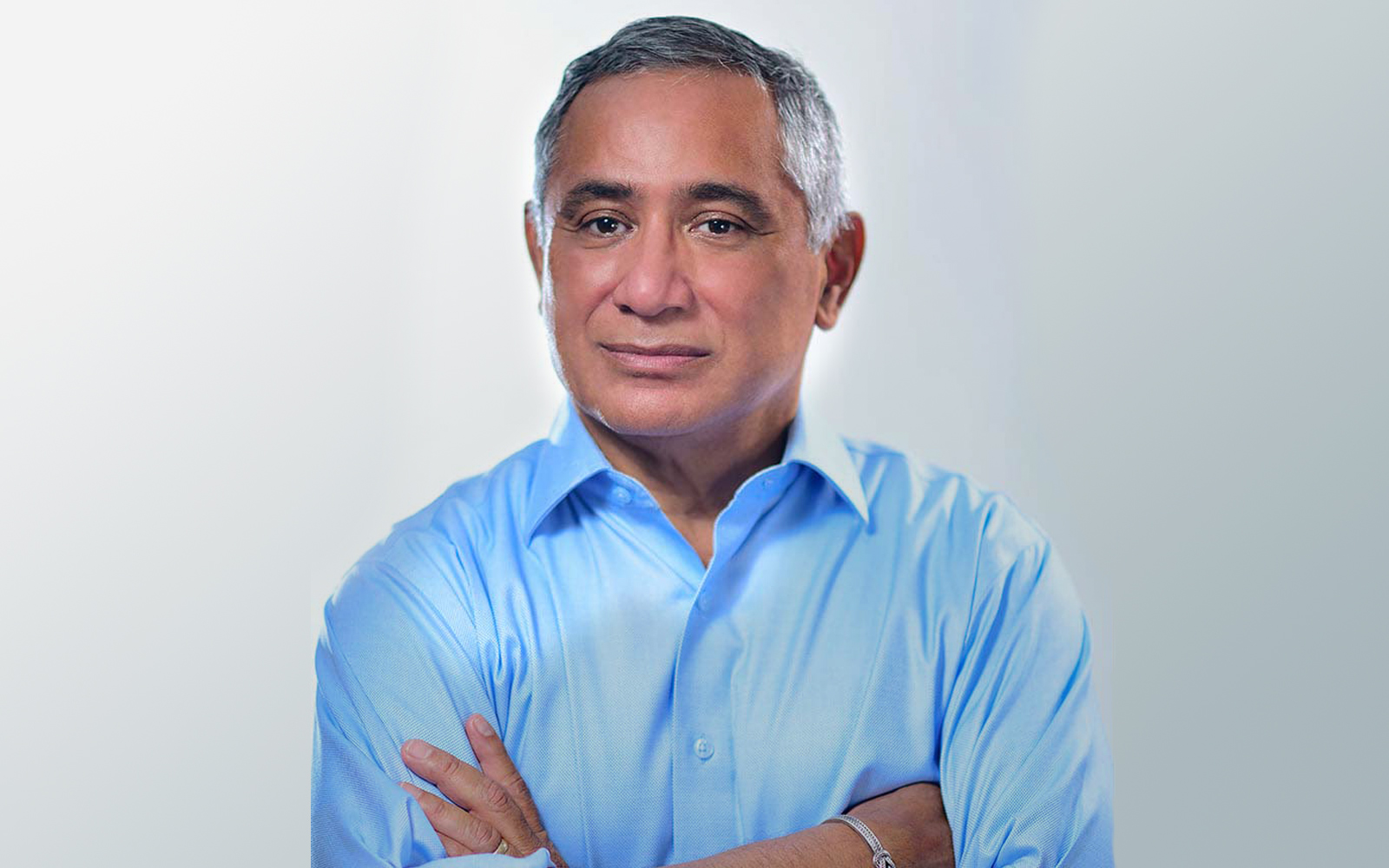
02 Feb Interview with The Hon. Juan Antonio Briceño, Prime Minister and Minister Finance of Belize
In your address to the nation in April 2021, you said that the government’s main mandate was to bring about change for the country. What is the seven-year Plan Belize? How would you summarize your vision, main objectives and achievements so far with reference to the current term and development plan?
Plan Belize is our government’s north star. It is our plan for rescue and recovery: sustainable growth and prosperity for Belizeans. In Plan Belize, we have set up our ideas and our actions for national development. It comes with some practical solutions for improving the lives of Belizeans, with better access to health care and education, improving infrastructure, low cost housing, strengthening our agricultural sector, boosting tourism, among many other things. Basically, Plan Belize is our commitment to social, economic and environmental justice.
The global economy is in turmoil after the Covid-19 pandemic and a sharp rise in oil prices. Consequently, your Cabinet has considered various relief measures. It approved fuel price relief measures and other measures to alleviate fare increases on bus commuters. How is the current situation affecting the economy and recovery path of Belize after the Covid crisis?
Covid-19 certainly has affected us very hard. Almost 40% of GDP depended on tourism; it’s almost like if you took off a switch and 40% disappeared. We realized that we had many problems, including a higher unemployment rate of about 25%. We knew that we had to get people back to work very quickly. To do that, we had to see how we could learn to live with Covid and have access to vaccines. Once we got the vaccines, we immediately ensured that our frontline workers, and frontline workers in tourism industry, could be able to get the vaccination; then, opening up the country as quickly but as safely as we possibly could.
Because we took those bold steps in late 2020, in 2021 we had a growth rate of over 12%, when the IMF was initially predicting only 3%.We managed to reduce unemployment from 25% to about 9%. Last year, exports increased by 49%, and for the first time, in more than 20 years, agriculture led the economic resurgence, selling cattle to Guatemala, and now to Mexico, selling our products in Central America. We’ve been very aggressive about these things.
We had at that time what we call a Superbond. It’s basically a private debt that we owe to private banks, mostly in the United States. Interest rates were too high and simply the government could not afford to pay. Partnering with the Nature Conservancy, we managed to borrow money from Credit Suisse. We negotiated very hard with the bondholders, approximately $553 million Belize dollars in debt, which is roughly $275 million USD, using the blue bond arrangement.
We negotiated very hard also with our public officers and our public servants to be able to cut salaries by 10%. We had to cut our expenditures by 20%. All those difficult bold decisions that we took helped us to put Belize in a more stable financial setting. Despite all those tough decisions, we are still working in our social programs, ensuring that the poorest of the poor can get some sort of food subsidy every month. We built over 200 low cost homes, mostly for single mothers, across the country of Belize. We expanded water systems all over the country. We expanded our national health insurance scheme that we’re doing to ensure that every citizen can have access to affordable health care. We made tough and bold decisions for the people of Belize.
On May 28, you tweeted, “Agriculture contributes approximately $600 million annually to economic output, and representing 80 percent of Belize’s domestic exports, and directly employs 18 percent of the population”. What are the government’s main priority sectors as it looks to reboot the country’s economy? What strategy is it using to incentivize small businesses and local participation?
My ministry, as minister of finance, just attended the launch and represented what we call the Belize National Investment Policy and Strategy for the country. This is a comprehensive study that we did in participation of a cross section of stakeholders. That investment policy identifies six priority sectors in Belize. Obviously, tourism and leisure is one of the main ones. We have agriculture which also includes agribusiness and agro-processing. We have the marine fisheries and aquaculture and the blue economy. We’re looking at light manufacturing, as well as sustainable, renewable energy, bio fuels and green infrastructure. We’re looking at the information technology and export services, which we refer to as the BPOs and professional services, real estate, logistics, internet and communication services.
The point is that there are so many opportunities in Belize. The pandemic taught us that we have to have a more resilient economy, but also a more diversified economy. We had put too many of our eggs in the tourism basket. When we had the crisis with the pandemic, 40% of GDP literally disappeared overnight. We cannot afford to let that happen, and that is why we’re working. There are so many opportunities in agriculture. We’re opening up markets; now with Mexico. Tourism continues to grow by leaps and bounds. And actually, incidentally last year, the BPO sector grew the largest as a percentage worldwide, because more companies and countries are looking at the opportunities of Belize. It’s a stable country, English speaking as a first language but we also speak Spanish. We’re close to the largest market in the world. We have a first class communication infrastructure. We have everything in place for people to come and invest in Belize.
The government embarked in a reform process to modernize and consolidate the business laws and processes in Belize, with the Belize Companies Bill as a flagship measure. What kind of opportunities do you see for Belize in the world’s new globalization model and what kind of advantages does Belize hold for foreign investors, particularly from the US?
Certainly, globalization is creating opportunities for Belize. Coincidentally, yesterday I met an investor from Jamaica, and he has BPOs in nine different countries. He was in Belize yesterday, because one of his clients wanted him to set up in Belize: they have heard so much about Belize and the opportunities that we have, realizing that the government is modernizing how you do business, and they want to take advantage of that. For instance, at the National Assembly we are debating the Belize Companies Bill. The present Belize Companies Act is over 100 years old; we felt that that’s almost literally obsolete. We need to modernize Belize so that we can take advantage of the opportunities of our globalized market.
The Belize Companies Bill includes a reform process. We need to strengthen compliance within international rules and regulations. The Belize Companies Bill will allow us to be able to take advantage of the digital transformation, leveraging the ICT. We believe that the new Belize Companies Act will improve investor confidence, boosting competitiveness and cultivating a culture of certainty, modernity and innovation in a globally competitive business environment. We feel that we are taking the right steps and moving in the right direction to be able to take advantage of a more globalized economy.
On May 27, you wrote a tweet referring to the resilience and recovery of the tourism sector in the first quarter, stating that it proves tourism is on a path to recovery. What kind of changes has the government made to Belize’s tourism roadmap to advance its offerings and foster sustainable economic growth?
We have updated the Belize National Sustainable Tourism Master Plan that focuses in the areas of development and vision for tourism, at the short, medium and long terms. What we were looking at is to be able to optimize the opportunities that we have, to build on leadership within the country. We need to be able to foster sustainability and enhance competitiveness in the tourism sector in Belize. We recognize that the tourism product that we have is unique. Our brothers and sisters in the Caribbean have wonderful beaches and a beautiful ocean. But they do not have what we have: we have that but also the largest living barrier reef in the world, we have the blue hole, we have the eco-tourism part of it, and you can go to visit our national parks and reserves, or the Mayan temples. We need to take advantage of all those opportunities to develop that product so that people would want to come not only to visit, but also to invest.
The development priorities that we have include cultural tourism, nature-based tourism, both inland and coastland, or what we refer to as green tourism initiatives. We’re working very closely with cruise lines. We’re looking at the cruise and the nautical tourism: ships can come and people who own yachts can come to visit Belize. We’re looking at special niches like medical tourism, conference center development or sport tourism. We have that advantage that we are small, compact but have so many opportunities and varieties that people would want to come and visit Belize or to invest in Belize.
What concrete actions has the government taken to reduce Belize’s carbon footprint from its industries and what more needs to be done for the country to reach its ambitious goals?
One of the agreements that we had under the blue bond initiative is to set money aside for marine conservation initiatives: every year the government sets aside approximately $8 million Belizean dollars or $4 million USD that the NGO community in marine conservation can have access to. We’ve also set up a trust fund: by 2040, we expect that we’re going to have at least $100 million US dollars, and that other partners would want to put money also into that trust fund.
One of the agreements that we did is to increase the marine spatial space that we have under protection. We’ve already agreed to include 30% of our ocean space into protected areas. We expect to do that by 2026, not 2030.
By doing these things and strengthening the different departments within the government, looking at the different pieces of legislation that we have to strengthen those areas, we could ensure that we can have development, but it has to be sustainable development, something that is aligned with the vision of Belize, that it is going to be a country that believes on sustainable development, that is conscious of our environment, aware that climate change is upon us, and that we need to take the necessary steps to be able to protect, not only our people in Belize, but also in the region.
As CARICOM chair, you co-hosted the second Global Covid Summit on May 12th with the United States, Senegal, Germany and Indonesia. Previously, the Central American Integration System, SICA, celebrated its 30 years, with Belize as a core member. Can you share your vision and priorities of your administration with reference to co-operation with the various bilateral and multilateral partners in the U.S. and beyond?
In Belize, because of its location, we have this wonderful opportunity that we can have a foot on each region, on the Caribbean region and also on the Central American region. We have been a member of CARICOM from its inception. I’ve had the privilege to be the president of CARICOM for six months. One of the challenges that we were all facing is the issue of the pandemic and the problems that it caused to us, not only health-wise. We have been using a lot of mega resources to be able to fight it; we have the PPPs, the medicines, the vaccines and everything necessary to ensure that we can keep our people safe and healthy. At a regional level, in CARICOM, we had to see how we can address that, to keep healthy systems in place, having access to vaccines, to medical equipment to be able to save lives.
We’ve had fairly effective immunization campaigns that have helped to stem the spread and the severity of the virus in the region. Covid is still here but we need to continue. As the chairman of CARICOM, we had the honor to co-chair the Covid-19 Summit on the 12th of May, with President Biden and the chair persons of the African Union, the European Union and the G-20 countries. It was a great opportunity, because it has allowed us to be frank, to discuss the pandemic and to see how the developed countries can help, especially developing countries like the Caribbean and Central America. We are happy that the world leaders have made generous commitments to boost the availability of vaccines and therapeutics through the World Health Organization, both COVAX and GAVI, which is the Vaccine Alliance. We believe that we’ve had a level of success from there.
When it comes to SICA, the Central American Integration System, it plays a very important role in the region, when it comes to the issue of integration, cooperation and collaboration among its member States. All of us we’re facing common challenges. The most pressing challenges that we are facing in Central America, certainly are climate change from hurricanes to droughts to flooding, security migration, and inequality in a region where poverty continues to grow, especially because of the Covid-19 pandemic.
The most effective way to address these issues is by working together as an integrated region and to be able to develop and implement regional solutions to these problems that we face. I have every confidence that SICA has played an important role in the region, and it will continue to play that critical role in the region, especially with our international partners. The economic recovery and the future prosperity of the region, certainly is integrally tied to the future of SICA.
What would be your final message?
Belize is a very small country, probably the size of the state of Massachusetts in the United States. We’re a very small population, just over 430,000, with beautiful, friendly, warm people, willing and open to people who come to visit our country, because we love our country and we’re proud of what we have. Belize is also a country that bridges two regions and offers endless opportunities for everyone. We have a strategic location and bountiful natural terrestrial and marine resources. We have a very young and vibrant population. It’s an investor-friendly government that creates opportunities for investors to come to Belize, who can invest successfully in Belize, and at the same time, create opportunities for our people. We have been doing everything possible to make Belize investor-friendly. We’ll be making everything possible to be able to grow the economy. But we can’t do it alone: we work on people to come and visit us, and at the same time, think about investing in Belize.
It is going to be one of the best decisions that you will ever make!
Sorry, the comment form is closed at this time.